
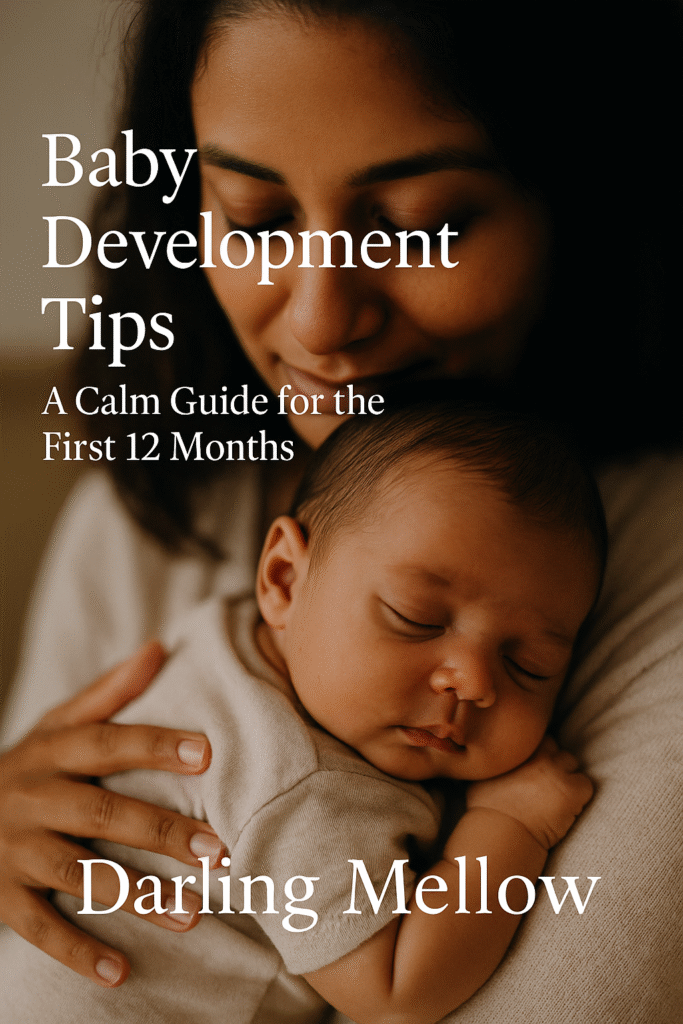
Baby Development Tips: A Calm Guide for the First 12 Months
Baby development tips are essential for helping you understand your baby’s emotional, physical and sensory growth during the first year. This guide brings you gentle, grounded baby development tips that support bonding, early learning, connection and calm routines without pressure or overwhelm. Your baby does not need strict schedules or perfect parenting. They need your voice, your presence and the feeling of being safe in your arms.
The first twelve months are filled with enormous neurological changes, milestones and tiny moments that shape your baby’s sense of security. These baby development tips are designed to help you feel informed, confident and calm as you navigate the early days, the sleepy haze and the constant learning curve that comes with motherhood.
Why Baby Development Tips Matter
Using trusted baby development tips helps you understand your baby’s unique communication style, emotional needs and learning patterns. Babies are not meant to develop at the same pace or follow textbook timelines. They grow through connection, repetition and the feeling of being understood. These baby development tips support the natural rhythm of development without comparing your baby to anyone else.
Modern parenting is full of noise. Social media, family pressure and old fashioned advice can make you question yourself. These baby development tips are here to help you tune out the noise and tune into your baby. When you follow your instincts and respond with warmth, you create a secure foundation that lasts for life.
Baby Development Tips for Emotional Bonding
Emotional bonding is the heart of early development. Babies rely on your reactions, your voice and your touch to make sense of the world. These baby development tips gently strengthen the bond between you and your little one.
Respond to Cries with Confidence
One of the most important baby development tips is simple: respond when your baby cries. Research from UNICEF UK shows that responsive care helps babies regulate stress, form secure attachments and develop healthy emotional patterns.
Hold, Cuddle and Comfort Often
Cuddling your baby is development. Skin to skin contact helps stabilise temperature, heart rate and breathing while also boosting bonding hormones. These baby development tips remind you that comfort is not a habit you need to break. It is how babies feel safe.
Talk Throughout the Day
Your voice is the most powerful learning tool your baby has. Narrating your day, describing objects or speaking softly while feeding all support early language development. This is one of the easiest and most natural baby development tips to embed into your routine.
Baby Development Tips for Physical Growth
Physical milestones happen gradually and differently for every baby. These baby development tips encourage natural movement without pressure or expectations.
Make Tummy Time Gentle and Flexible
Tummy time strengthens your baby’s core and upper body, but it does not need to be a battle. Try short, frequent sessions instead of long stretches. Place your baby on your chest or across your lap if they prefer closeness. These baby development tips help tummy time feel safe, not stressful.
Encourage Free Movement
Limit time in bouncers, swings and seats so your baby can move freely. Babies develop rolling, crawling and early sitting skills from spending time on soft mats and blankets. Free movement is one of the most effective baby development tips for natural growth.
Let Them Explore Textures
Hands and feet are your baby’s first learning tools. Offer soft cloths, silicone toys or crinkly materials to stimulate their senses. Simple experiences create strong neural pathways.
Baby Development Tips for Sensory Learning
Sensory experiences shape your baby’s early understanding of their world. These baby development tips help build sensory awareness without overstimulation.
Use Everyday Household Sounds
You don’t need expensive sensory toys. Babies learn from the sound of your voice, running water, rustling fabric or a spoon tapping a bowl. Everyday life is full of sensory learning opportunities.
Offer High Contrast Books and Soft Books
Black and white images, simple shapes and gentle illustrations are ideal. Show babies pictures of faces, animals and everyday objects. Keep sessions slow and responsive.
Give Space to Process
Babies sometimes need pauses to absorb sensations. Give them time to look, listen and explore without rushing. These baby development tips help prevent overstimulation and support calmer learning.
Baby Development Tips for Sleep and Calm
Sleep can feel unpredictable and overwhelming. These baby development tips help you understand your baby’s behaviour and create gentle routines.
Watch for Early Sleep Cues
Yawning, staring, rubbing eyes or turning away are signals your baby is ready to rest. Responding early prevents overtiredness and supports easier settling.
Create Soft, Predictable Sleep Environments
Dim lights, gentle tones and slow movements signal to your baby that it is time to relax. Routines do not need timelines. They only need consistency.
Ignore Outdated Advice About “Bad Habits”
Rocking, feeding or holding your baby to sleep is not a mistake. Babies sleep best when they feel safe. They will naturally grow out of these needs as their nervous system matures.
Baby Development Tips for Feeding
Feeding is nourishment, comfort and connection. These baby development tips support early feeding confidence no matter how you feed your baby.
Feed on Demand
Responding to hunger cues helps regulate your baby’s appetite and supports healthy growth. Watching your baby is more effective than watching the clock.
Introduce Solids Gently at Six Months
When your baby shows signs of readiness, let them explore flavours and textures at their own pace. Responsive feeding supports a positive relationship with food.
Offer a Variety of Foods
Provide vegetables, fruits, soft textures and gentle tastes without pressure. Babies often make funny faces when trying something new. This is part of the learning process.
When to Seek Extra Support
If something feels different or concerning, reach out to your health visitor or GP. Trust your instincts. This is part of responsive parenting. The NHS Baby Development Guide offers reliable information if you want reassurance.
A Final Thought for Tired, Loving Mums
You do not need to have everything perfect. These baby development tips are here to support you, not overwhelm you. Take things slowly. Celebrate the tiny wins. Let yourself rest when you can. Your love is enough. Your presence is the strongest foundation your baby will ever have.