
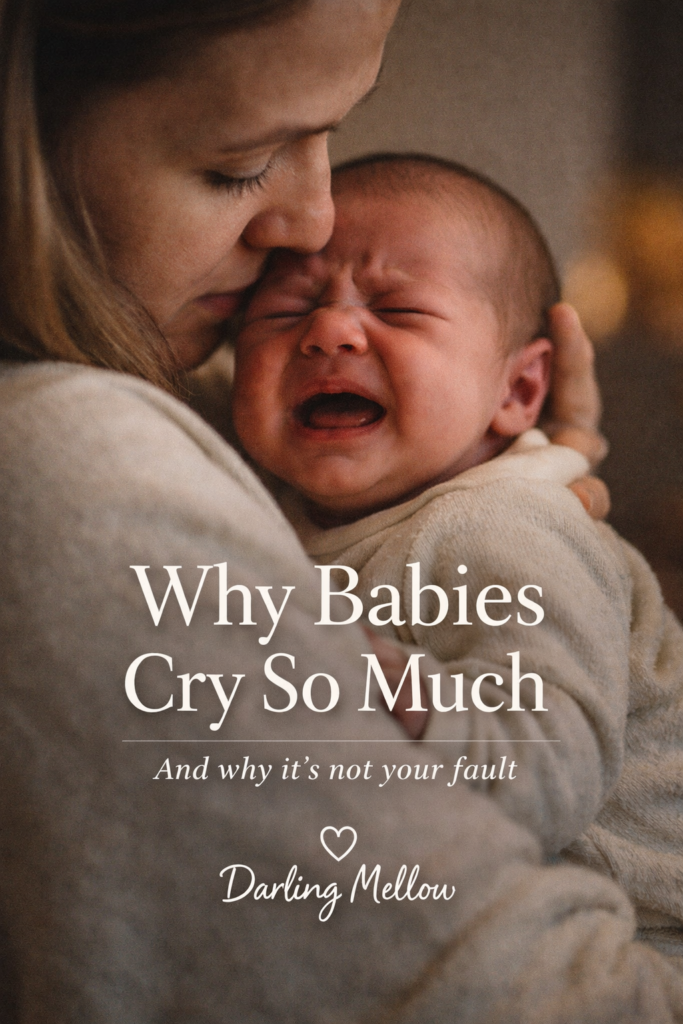
Why Babies Cry So Much (And How to Tell What They Need)
Why babies cry so much is one of the first questions new parents ask – often late at night, holding a baby who won’t settle, wondering if they’re doing something wrong.
Crying can feel overwhelming, especially when you’re exhausted, emotional, or unsure how to respond. The truth is simple but rarely explained clearly: babies cry because it is their primary form of communication, not because you’re failing.
This guide explains why babies cry so much, what different cries can mean, and how to respond with confidence rather than panic.
Why Babies Cry So Much in the First Place
Babies cry because they have no other reliable way to communicate. They cannot speak, gesture clearly, or regulate their own bodies yet. Crying is how they signal that something in their world feels wrong, uncomfortable, or overwhelming.
Common reasons babies cry include:
- Hunger
- Tiredness
- Discomfort (wet nappy, temperature, tight clothing)
- Overstimulation
- Need for comfort or closeness
Importantly, crying is not a sign of manipulation. Babies do not have the cognitive ability to cry “on purpose”. They cry because their nervous system needs help.
Why Crying Often Peaks in the Newborn Stage
Many parents notice that crying increases during the first weeks of life. This is normal.
Newborns are adjusting to a world that is louder, brighter, colder, and far more stimulating than the womb. Their digestive systems are immature, their sleep cycles are short, and they have little ability to self-soothe.
This adjustment period can lead to frequent crying, especially in the evenings. It does not mean something is wrong.
Different Types of Baby Crying
While every baby is different, over time many parents learn to recognise patterns in their baby’s cries.
Hunger Cry
Often rhythmic and repetitive, increasing in intensity if feeding is delayed. Rooting or sucking motions may accompany it.
Tired Cry
Usually whiny or fussy, paired with rubbing eyes, staring blankly, or turning the head away.
Discomfort Cry
Sudden, sharp, or unsettled crying that doesn’t ease with feeding or holding. Often linked to nappies, gas, or temperature.
Overstimulation Cry
Happens after busy days, visitors, or noisy environments. Baby may arch their back or turn away.
You are not expected to identify every cry instantly. Responding with care is more important than decoding perfectly.
Why Responding to Crying Matters
Responding to crying does not “spoil” a baby.
When you respond, you help regulate your baby’s nervous system. Over time, this builds a sense of safety and trust. Babies who feel secure often become more confident and settled, not less.
You are teaching your baby that their needs matter and that help arrives when they ask.
What If Nothing Seems to Work?
There will be times when you’ve fed, changed, cuddled, and checked everything – and your baby still cries.
This does not mean you are doing anything wrong.
Some crying is simply release. Babies experience big sensations and emotions in small bodies. Sometimes they need to cry while being held, rather than be fixed.
Your calm presence still matters, even when the crying continues.
When Crying Feels Overwhelming for Parents
Listening to prolonged crying can be deeply distressing. It can trigger anxiety, frustration, guilt, or feelings of failure.
If you feel overwhelmed:
- Put the baby somewhere safe and step away briefly
- Take slow breaths or drink water
- Ask for support if possible
Looking after yourself is part of looking after your baby.
When to Seek Medical Advice
While most crying is normal, trust your instincts.
Seek advice if your baby:
- Cries inconsolably for long periods every day
- Has a high-pitched or unusual cry
- Shows signs of illness, fever, or feeding difficulties
You are allowed to ask questions and seek reassurance.
A Reassuring Reminder
If you are wondering why babies cry so much, it usually means you care deeply about getting it right.
Crying is not a verdict on your parenting. It is a phase, a language, and a sign of development.
You are learning your baby, and your baby is learning the world. Neither of you needs to be perfect.
Frequently Asked Questions
Is it normal for babies to cry every day?
Yes. Daily crying is normal, especially in newborns and young babies.
Can babies cry too much?
Most crying is normal, but persistent inconsolable crying should be discussed with a health professional.
Should I let my baby cry it out?
There are different approaches, but responding to crying helps babies feel secure, especially in the early months.
Does crying mean my baby is unhappy?
No. Crying is communication, not a reflection of your baby’s overall happiness.