Best Science Kits and Science Books for Kids
Affiliate links. Some links in this article earn us a small commission if you buy through them, at no extra cost to you. It never changes what we recommend or what we say about it. How we choose what to feature.
Match the kit to the age: Galt Science Lab from 6, a 150 experiment box from 8, Snap Circuits from 5 and Hot Wires from 8. Add one big reference book for the questions a kit cannot answer. Our 10 science picks run from a first encyclopedia to KS3 revision.
Last reviewed 23 November 2026. How things get on our lists is explained on the main picks page.
The 10 picks at a glance
| Pick | What it is | Age guide | Made by |
|---|---|---|---|
| Science Lab, 20 experiments | Science kit | Ages 6 and up | Galt |
| 150 Experiments Science Kit | Science kit | Ages 8 and up | UNGLINGA |
| Snap Circuits Beginner | Electronics kit | Ages 5 and up | Snap Circuits |
| Hot Wires electronics set | Electronics kit | Ages 8 and up | John Adams |
| Knowledge Encyclopedia Science! | Reference book | KS2 and up | DK |
| The Periodic Table Book | Reference book | KS2 and up | DK |
| KS2 Science Study Book | Study book | Ages 7 to 11 | CGP |
| My Encyclopedia of Very Important Things | First encyclopedia | Ages 5 to 9 | DK |
| Dinosaurs: A Children’s Encyclopedia | Reference book | Ages 9 to 12 | DK |
| KS3 Science Complete Revision and Practice (Higher) | Revision and practice book | Years 7 to 9 | CGP |
What are the best science kits for kids?
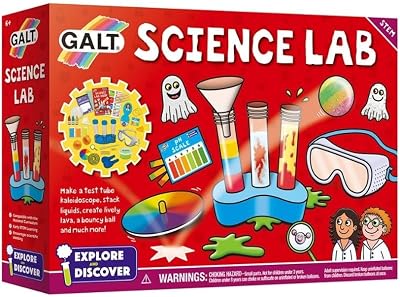
The two general kits on this list suit different ages. Galt Science Lab is for ages 6 and up and has 20 experiments with the equipment included, among them test tubes, crystals and slime, plus a lab book to record results. The UNGLINGA kit is for ages 8 and up and has 150 experiments across chemistry, physics and earth science, with a step by step manual. Both are on the list because large numbers of buyers rate them highly.
What is a good science kit for a 6 year old?
At 6, pick a kit with a small number of experiments that each work first time. Galt Science Lab is made for this age. For a 5 year old, the Galt Rainbow Lab on our popular list has 12 experiments and is marked for ages 5 and up. Snap Circuits Beginner is also suitable from 5 and teaches how a circuit works.
What is a good science kit for an 8 year old?
By 8 a child can read the manual and wants more to do. The 150 experiment kit gives months of activities, and John Adams Hot Wires adds electronics with 100 experiments, including a burglar alarm and a lie detector. Hot Wires needs four AA batteries, which are not in the box, so buy those at the same time.
What is the best electronics kit for kids?
Start with Snap Circuits Beginner for ages 5 and up: 14 parts that snap together to build more than 20 working circuits, with a colour manual and no soldering. Move to Hot Wires from 8, which has 100 experiments involving light, sound and movement. Both let a child see what a switch, a bulb and a motor actually do, which is hard to get from a book.
What is the best science encyclopedia for kids?
For ages 5 to 9, My Encyclopedia of Very Important Things from DK covers space, countries, languages, history and dinosaurs in 224 pages. For older children, Knowledge Encyclopedia Science! is a 208 page visual reference built around detailed computer generated images. Leave either one where it will be picked up.
What is the best dinosaur encyclopedia?
The one we list is Dinosaurs: A Children’s Encyclopedia from DK. It has 304 pages on dinosaurs and other prehistoric animals, and the publisher suggests it for ages 9 to 12, though plenty of younger enthusiasts will pore over the pictures.
Is there a periodic table book for kids?
Yes. The Periodic Table Book from DK goes through all 118 elements one at a time, with more than 1,000 images across 208 pages. It works as a browsing book for a curious 8 year old and as a reference later, when chemistry lessons start.
Which KS2 and KS3 science books should I buy?
The CGP KS2 Science Study Book has clear notes on every science topic for ages 7 to 11 in 112 pages, with recap questions. For Years 7 to 9, the CGP KS3 Science Complete Revision and Practice book adds diagrams, test style questions and mixed topic tests across 208 pages. The KS3 book listed here is the Higher level edition.
How do you teach science at home?
Begin with a question your child actually asked, such as why ice floats or how a plant knows which way is up. Do something practical to test it, whether from a kit or with what is in the kitchen, and have them write or draw what happened. Then look the answer up together in a reference book. The CGP study book is useful as a checklist of topics, so you can see what has not come up yet.
What are the best science toys for kids who like building?
Children who would rather make something than mix something usually prefer circuits. Both electronics kits here are built by hand and then switched on, which is very satisfying. After those, the programmable robot on our coding list and the marble puzzle on our puzzles and logic list are natural next presents.
All 10 picks, with photos
Science Lab, 20 experiments
Why it is here: Twenty experiments with the kit in the box, including test tubes, crystals and slime, plus a lab book for writing up what happened. A good first kit.
See it on Amazon: Science Lab, 20 experiments
150 Experiments Science Kit
Why it is here: A much bigger box for older children: 150 experiments across chemistry, physics and earth science, with a step by step illustrated manual.
See it on Amazon: 150 Experiments Science Kit
Snap Circuits Beginner
Why it is here: Fourteen snap together parts that build more than 20 working circuits, with a colour manual. Electricity with no soldering.
See it on Amazon: Snap Circuits Beginner
Hot Wires electronics set
Why it is here: The step up: 100 experiments, including a burglar alarm and a lie detector. It needs four AA batteries, which are not in the box.
See it on Amazon: Hot Wires electronics set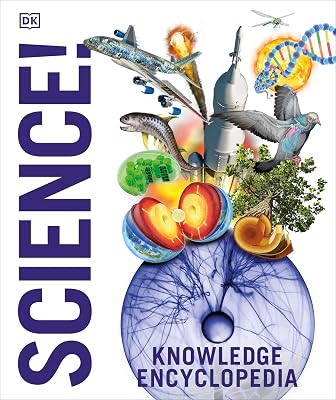
Knowledge Encyclopedia Science!
Why it is here: A big visual reference book built around detailed computer generated images. The one to pull off the shelf when a question comes up.
See it on Amazon: Knowledge Encyclopedia Science!
The Periodic Table Book
Why it is here: All 118 elements, one by one, with more than 1,000 images.
See it on Amazon: The Periodic Table Book
KS2 Science Study Book
Why it is here: Clear notes on every KS2 science topic, with recap questions along the way. Handy for checking you have covered the ground.
See it on Amazon: KS2 Science Study Book
My Encyclopedia of Very Important Things
Why it is here: A first encyclopedia covering space, countries, languages, history, dinosaurs and more in 224 pages.
See it on Amazon: My Encyclopedia of Very Important Things
Dinosaurs: A Children’s Encyclopedia
Why it is here: A 304 page visual encyclopedia of dinosaurs and other prehistoric animals.
See it on Amazon: Dinosaurs: A Children’s Encyclopedia
KS3 Science Complete Revision and Practice (Higher)
Why it is here: Notes, diagrams and examples on every KS3 science topic, with test style questions and mixed topic tests.
See it on Amazon: KS3 Science Complete Revision and Practice (Higher)As an Amazon Associate I earn from qualifying purchases. Prices and availability change, so check Amazon for the current details. Reviews and stock last checked 23 November 2026. See every list.
Science is easy to do for nothing as well: our list of free home education resources includes experiments and videos. For the outdoor side, see the nature and outdoors list.